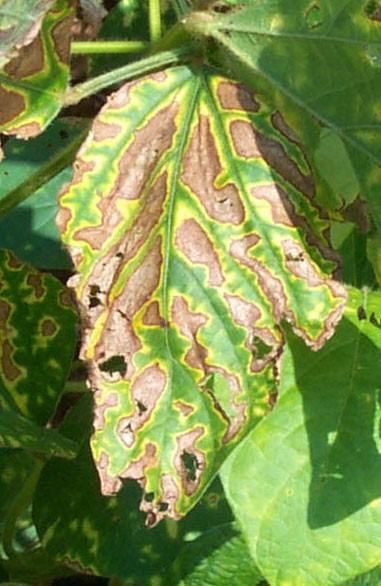
North Carolina State University and Cooperative Extension From Steve Koenning, Soybean Pathology Specialist SOYBEAN DISEASE UPDATE: Physiological Scorch – Is it SDS, Stem Canker, Black Root Rot (CBR), Brown Stem Rot, or something else? In the Plant Disease and Insect Clinic (PDIC)we are receiving soybean samples with the symptom of Physiological Scorch as shown in the figure. At this point most of it is SDS or Sudden Death Syndrome, but numerous diseases can cause similar symptoms. Regardless of the cause this symptom is indicative of a problem with the vascular system once soybean has shifted to the reproductive phase. Usually “Scorch” is the result of a root-rot such as SDS, CBR, dectys stem borer, or Phytophthora root rot. Spraying a fungicide will not impact these diseases at all and should be avoided. Below are links to several disease notes that will explain how to differentiate these diseases and what action to take in the future.
Soybean Scorch
(Updated: Oct. 22, 2021, 2:23 p.m.)