New fact sheet posted January 2023: Harvesting Scabby Wheat and Dealing With DON
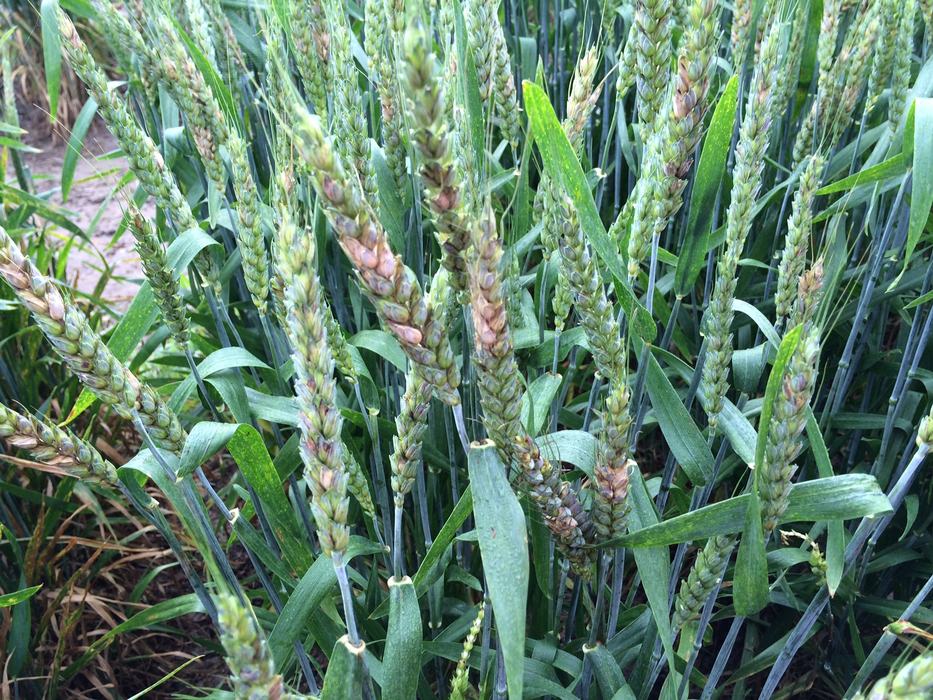
North Carolina plants between 400,000 and 800,000 acres of small grains annually, most of which is soft red winter wheat harvested for grain. Statewide average yields for wheat range from 40 to 70 bushels per acre. The largest production areas are in the Coastal Plain, Tidewater, and Piedmont regions. Oats and barley are planted on about 35,000 and 15,000 acres in North Carolina, respectively. The relatively warm winters and humid growing seasons in North Carolina are conducive to foliar fungal diseases and insect-transmitted viruses. The main diseases that limit yield and quality in North Carolina wheat are powdery mildew, Fusarium head blight, leaf rust, barley yellow dwarf virus, and Septoria nodorum blotch (SNB). When prices and yield potential justify the costs, foliar fungicides are used for foliar diseases.
More information about disease in small grains is available from Dr. Christina Cowger, USDA-ARS Small Grains Pathologist, NCSU Department of Entomology & Plant Pathology, Tel. 919-513-7388, Christina.Cowger@usda.gov.
Small Grains Disease and IPM Information
- Small Grain Disease Factsheets
- North Carolina Small Grain Production Guide -- 2021 edition, see chapter on disease management
- NC Wheat Variety Disease Ratings
- IPM Center Small Grains Profile
Small Grains Problem Diagnosis Services
- Plant Disease and Insect Clinic for disease and problem diagnosis
- NCDA&CS Agronomic Services for tissue, solution, and nematode assays
Small Grains Extension Collaborators
More information about disease in small grains is available from Dr. Christina Cowger, USDA-ARS Small Grains Pathologist, NCSU Department of Entomology & Plant Pathology, Tel. 919-513-7388, Christina.Cowger@usda.gov.